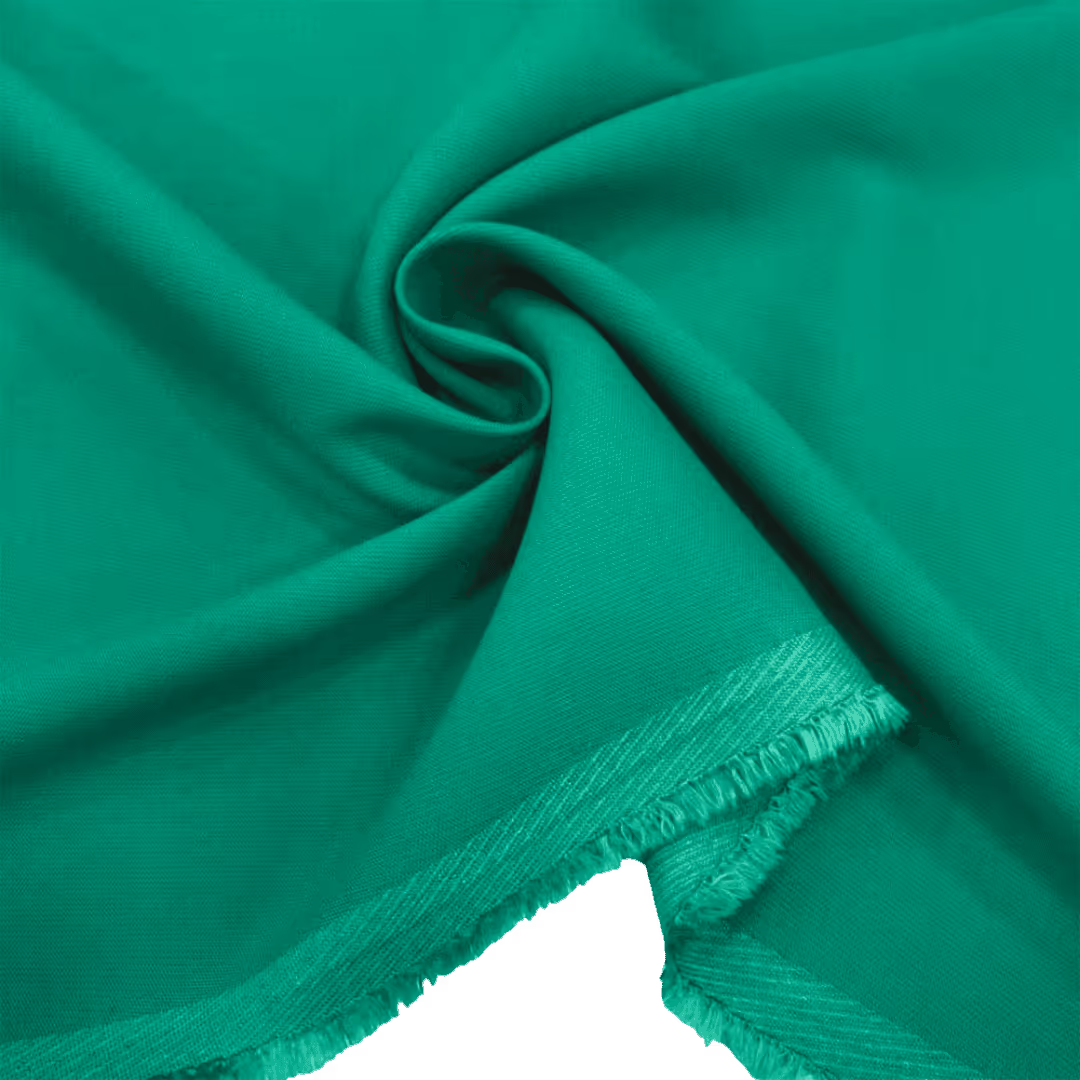
Gabardine fabric, a sturdy textile product produced with a cross (twill) arrangement of warp and weft yarns, showing high resistance to water, wind, and abrasion due to its tight weave.
Contents
- What is Gabardine Fabric and Its History
- Gabardine Fabric Technical Specifications
- Usage Areas and Advantages
What is Gabardine Fabric and Its History
The origin of the term dates back to the British inventor Thomas Burberry. Burberry developed this fabric, which he introduced for civilian use, specifically for military clothing and for durability against outdoor conditions; over time, it became standard for trench coats and tailored clothing. The main characteristic of gabardine is the distinct diagonal line pattern formed on its surface.
Gabardine Fabric Technical Specifications
One of the most striking aspects of this fabric type is its weight range. Generally 250-350 g/m² these values, which vary between, give the fabric a heavy and robust structure. Furthermore, the ability to provide flexibility by adding elastane is one of the most important features of modern versions.
- Weave Type: Twill (diagonal weave).
- Fiber Content: %100 wool, cotton, or polyester blends.
- Surface Structure: Distinct diagonal pattern, smooth texture.
- Protection: Due to its tight weave, it is difficult for wind and heavy rain to pass through.
| Feature | Value / Description |
|---|---|
| Weight | Generally in the range of 250-350 gr/m². |
| Resistance | Resistant to tearing with high tensile strength. |
| Care | It shapes easily, accepts ironing, and is easy to clean. |
Usage Areas and Advantages
It has a wide range of uses from daily life to the professional sector. It is one of the most preferred fabrics for the production of trousers, jackets, trench coats, and dresses. It is particularly preferred in the healthcare sector due to its hygienic, easy-to-wash, and long-lasting properties.
- Healthcare Sector: It is widely used in the trousers of operating room personnel. For example, Operating Room Gabardine Fabric its properties reinforce its popularity in this field.
- Office Wear: It is ideal for company uniforms due to its ability to maintain its creases and shape for a long time.
- Garment Industry: Provides functionality in outerwear and trench coats.